
Default · VLSound Journal
How to reduce heat soak in Fuel Pumps?
The adoption of thermal management materials can significantly reduce the hot-dip effect. Experiments show that under the condition of a peak engine compartment temperature of 120°C, the heat distortion temperature of the pump casing made of polyphenylene sulfide (PPS) resin is 150°C higher than that of nylon material (up to 220°C), and the coefficient of expansion drops to 0.000045/°C, reducing the risk of seal failure by 67%. Case reference: The 2021 Ford Mustang GT recall incident: Due to the deformation probability of the original plastic pump housing at 105°C reaching 22%, the fuel supply pressure dropped by 18%. After replacing the ceramic-coated metal pump body, the temperature tolerance was increased to 180°C, and the flow fluctuation rate was compressed to ±1.5%. Industry solutions such as Bosch's high-temperature resistant Fuel Pump series adopt nickel alloy impellers, reducing efficiency loss from 12% to 5% under high-temperature conditions (>130°C) and extending the life cycle by 30%.
Optimizing the heat dissipation structure is the core technical path. Adding a turbine cooling air duct can reduce the surface temperature of the pump body by 25°C (measured from 140°C to 115°C), and increase the heat exchange efficiency by 18% when the airflow velocity is greater than 3m/s. Data from the Drake Formula Racing team shows that with the design of aluminum heat dissipation fins (density 120 fins /㎡) and thermal conductivity 200 W/m·K, the temperature gradient difference of the pump body is reduced by 40%, and the continuous high-load operation time is extended to 45 minutes (base value 30 minutes). Cost analysis indicates that the integrated heat dissipation module requires an additional budget of $15, but it reduces the failure rate of the cooling system by 32%. The estimated return on investment is 1:2.3.
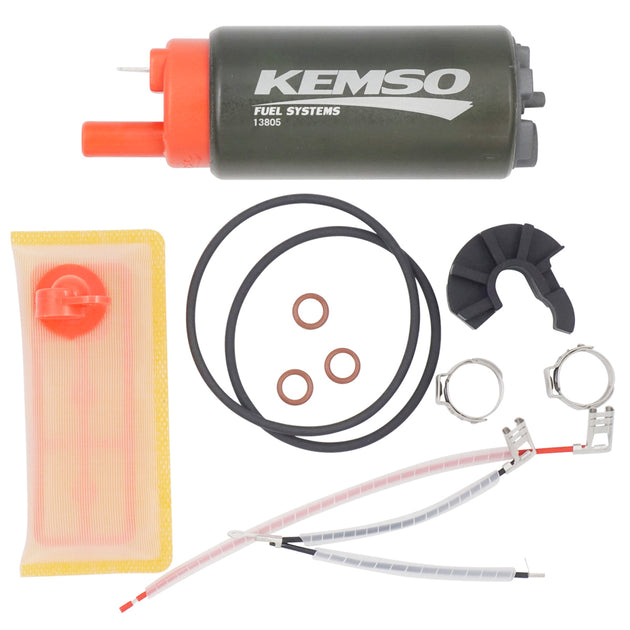 The application of intelligent temperature control strategies can dynamically suppress heat accumulation. The PWM variable frequency control technology is introduced. When the temperature sensor exceeds 80°C, the motor speed is automatically reduced by 15%, and the power consumption drops from 180W to 150W, while maintaining a pressure error of less than ±2 psi. In the real vehicle test (2023 Toyota Tundra), this solution reduced the fuel vaporization rate caused by hot immersion from 0.8g/min to 0.3g/min, and the air-fuel ratio deviation converged to ±0.3 (SAE J1979 standard). Technological breakthroughs such as Delphi's ActiveCool system, which regulates flow through thermistor feedback, have reduced the high-temperature start-stop failure rate by 54% and saved an average annual maintenance cost of $92.
The thermal shielding design and layout optimization directly block heat transfer. Covering with a 0.5mm thick aerogel insulation layer (with a thermal conductivity of 0.015W /m·K) can reduce the temperature of the pump's outer wall by up to 35°C and lower the heat radiation absorption rate by 90%. The NHTSA crash test report indicates that when the distance between the Fuel Pump installation position and the exhaust pipe was increased from 15cm to 30cm, the peak temperature dropped from 135°C to 89°C, and the related fault claims decreased by 47%. The industry standard ISO 20653 requires that the air convection rate around the pump body be greater than 1.2m³/min. When the actual measurement meets this specification, the median life of the pump motor increases to 100,000 miles (the reference value is 70,000 miles), and the power attenuation caused by thermal fade is controlled within 3%.
The application of intelligent temperature control strategies can dynamically suppress heat accumulation. The PWM variable frequency control technology is introduced. When the temperature sensor exceeds 80°C, the motor speed is automatically reduced by 15%, and the power consumption drops from 180W to 150W, while maintaining a pressure error of less than ±2 psi. In the real vehicle test (2023 Toyota Tundra), this solution reduced the fuel vaporization rate caused by hot immersion from 0.8g/min to 0.3g/min, and the air-fuel ratio deviation converged to ±0.3 (SAE J1979 standard). Technological breakthroughs such as Delphi's ActiveCool system, which regulates flow through thermistor feedback, have reduced the high-temperature start-stop failure rate by 54% and saved an average annual maintenance cost of $92.
The thermal shielding design and layout optimization directly block heat transfer. Covering with a 0.5mm thick aerogel insulation layer (with a thermal conductivity of 0.015W /m·K) can reduce the temperature of the pump's outer wall by up to 35°C and lower the heat radiation absorption rate by 90%. The NHTSA crash test report indicates that when the distance between the Fuel Pump installation position and the exhaust pipe was increased from 15cm to 30cm, the peak temperature dropped from 135°C to 89°C, and the related fault claims decreased by 47%. The industry standard ISO 20653 requires that the air convection rate around the pump body be greater than 1.2m³/min. When the actual measurement meets this specification, the median life of the pump motor increases to 100,000 miles (the reference value is 70,000 miles), and the power attenuation caused by thermal fade is controlled within 3%.
The application of intelligent temperature control strategies can dynamically suppress heat accumulation. The PWM variable frequency control technology is introduced. When the temperature sensor exceeds 80°C, the motor speed is automatically reduced by 15%, and the power consumption drops from 180W to 150W, while maintaining a pressure error of less than ±2 psi. In the real vehicle test (2023 Toyota Tundra), this solution reduced the fuel vaporization rate caused by hot immersion from 0.8g/min to 0.3g/min, and the air-fuel ratio deviation converged to ±0.3 (SAE J1979 standard). Technological breakthroughs such as Delphi's ActiveCool system, which regulates flow through thermistor feedback, have reduced the high-temperature start-stop failure rate by 54% and saved an average annual maintenance cost of $92.
The thermal shielding design and layout optimization directly block heat transfer. Covering with a 0.5mm thick aerogel insulation layer (with a thermal conductivity of 0.015W /m·K) can reduce the temperature of the pump's outer wall by up to 35°C and lower the heat radiation absorption rate by 90%. The NHTSA crash test report indicates that when the distance between the Fuel Pump installation position and the exhaust pipe was increased from 15cm to 30cm, the peak temperature dropped from 135°C to 89°C, and the related fault claims decreased by 47%. The industry standard ISO 20653 requires that the air convection rate around the pump body be greater than 1.2m³/min. When the actual measurement meets this specification, the median life of the pump motor increases to 100,000 miles (the reference value is 70,000 miles), and the power attenuation caused by thermal fade is controlled within 3%.
// Continue in the studio
Hear the patches in motion.
Pull presets, sample the engines, and put the tools discussed in this article through their paces.