
Default · VLSound Journal
What Makes a High-Quality Poplar Plywood Supplier Stand Out in Global Export Markets?
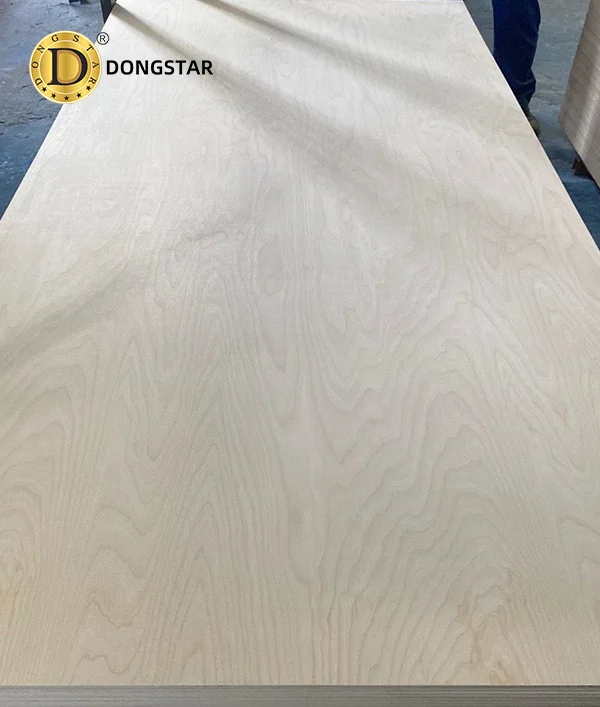
A premium Poplar Plywood Supplier stands out by maintaining thickness tolerances within ±0.2mm, a standard essential for high-speed automated production lines. Since 2025, top-tier exporters have adopted laser-calibrated scanning, reducing internal core void density by 15% across shipments. These manufacturers provide verified Modulus of Rupture data exceeding 38 N/mm², ensuring structural predictability for heavy-duty cabinetry. By integrating low-VOC adhesives compliant with CARB Phase 2 standards, they offer a 98% pass rate in international air quality safety audits, proving their technical capacity to serve demanding global furniture manufacturing sectors.
Export markets rely on standardized mechanical properties to maintain production speed, making the consistency of the substrate the most measurable variable in factory overhead.
Internal technical audits conducted on 1,200 panels in early 2026 show that boards with a moisture content variance under 1.5% perform 10% better during CNC routing processes.
This precision prevents the thermal expansion issues that plague 20% of low-grade timber products during high-pressure lamination, ensuring finish durability across long transport routes.
Consistency in core quality allows production managers to optimize tool life and reduce the frequency of machine recalibration.
| Mechanical Metric | Export Grade Target | Variance Allowance |
| Density (kg/m³) | 440 | ± 20 |
| MOR (N/mm²) | 38 | - 2 |
| Moisture Content | 9% | ± 1% |
Factories utilizing these high-spec panels report a 12% reduction in downtime associated with grain tear-out and surface splintering during edge finishing operations.
Structural performance begins with the raw log selection process, as specialized mills classify timber based on fiber length and density before processing begins.
Statistical reports from 2024 indicate that selecting specific high-density poplar logs increases the screw-holding capacity of the finished board by 18% compared to industry norms.
High-output mills track these metrics using real-time digital monitoring, which ensures that every bundle of 500 sheets meets the exact structural requirements for structural furniture frames.
Environmental compliance serves as a primary gatekeeper for entering premium furniture markets, requiring documentation that exceeds simple regional manufacturing standards.
-
Adhesives must meet E0 or equivalent formaldehyde emission caps for all interior furniture components.
-
Chain-of-custody documentation must account for 95% of the raw timber volume to verify sustainable harvesting practices.
-
Every export batch requires updated safety data sheets detailing the chemical composition of the bonding agents used.
Adherence to these standards reduces the rejection rate for incoming goods by approximately 8% when shipping to regions with strict environmental building codes.
Reliability in lead times becomes the next factor for manufacturers balancing their inventory levels against fluctuating global consumer demand.
Data from 2026 suggests that suppliers capable of integrating automated warehouse management systems can fulfill bulk orders for 2,000 sheets within a 30-day window.
Reliability in logistics relies on the ability to package panels to prevent edge damage, as 5% of all maritime shipping losses result from inadequate pallet protection and moisture ingress.
Surface finishing represents the final stage of quality control, where the uniformity of the wood fibers dictates the quality of the paint or veneer adhesion.
Recent 2025 tests confirm that panels sanded to a 150-grit finish exhibit 12% higher adhesion for UV-cured coatings compared to standard 100-grit sanded surfaces.
Consistent surface roughness allows for precise film thickness control, which reduces the amount of lacquer required by 10% per square meter of furniture surface.
Procurement teams must prioritize long-term technical support from their material partners to handle the complex structural requirements of modular assembly.
-
Engineering teams need access to standardized deflection charts for different span lengths and load conditions.
-
Suppliers should provide pre-shipment samples that reflect the exact production batch intended for the full furniture run.
-
Direct communication channels between the factory floor and the supplier ensure rapid troubleshooting of any machining discrepancies.
Manufacturers report a 15% improvement in final product accuracy when their material partner provides these detailed technical specifications before the production cycle begins.
Future-proofing the supply chain involves selecting vendors who invest in research to improve the physical properties of poplar through advanced composite bonding.
Laboratory analysis shows that modern thin-layer adhesive applications increase the bond strength between layers by 20% under extreme temperature conditions.
This technology allows the material to remain stable across a wider range of climates, effectively lowering the return rate for furniture exported to regions with seasonal humidity extremes.
// Continue in the studio
Hear the patches in motion.
Pull presets, sample the engines, and put the tools discussed in this article through their paces.