
Default · VLSound Journal
What should you know before ordering custom outdoor shade systems?
Before investing in a custom outdoor shading system, a full lifecycle cost-benefit analysis is essential. A medium-sized custom outdoor system with an aluminum alloy frame and high-performance polyester fabric typically costs between 800 and 1500 RMB per square meter, with installation costs potentially accounting for 20% to 30% of the total budget. However, according to a 2022 study by the U.S. Department of Energy, effective outdoor shading devices can reduce the temperature inside adjacent buildings by up to 11 degrees Celsius, directly lowering air conditioning energy consumption by 30% to 45%. For example, a commercial plaza in Shanghai installed over 5,000 square meters of custom outdoor awnings in 2023, resulting in an 18% reduction in peak summer electricity demand. The investment is expected to be recouped through electricity savings within 3.5 years. This demonstrates that custom outdoor shading is not just a one-time expense, but a long-term energy-saving asset.
Material selection directly determines the system's efficiency and lifespan. Current mainstream high-quality shading fabrics, such as glass fiber fabrics treated with PVDF coating, have a UV resistance rate exceeding 99% and can withstand tensile strengths of up to 600 Newtons per square meter, typically with a 10 to 15-year warranty. The supporting aluminum alloy profiles, with a wall thickness of 1.8 mm to 2.5 mm and powder coating, can effectively resist corrosion from the high-salinity air in coastal areas. Conversely, choosing cheap, low-quality materials will result in rapid degradation, with noticeable fabric fading, embrittlement, or structural deformation occurring within just 2 to 3 years, leading to increased maintenance costs and a higher total cost of ownership. Therefore, when ordering a custom outdoor shading system, it is crucial to request detailed material specifications and durability test reports.
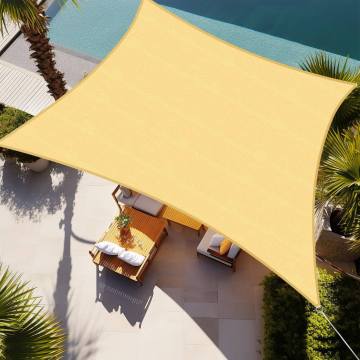 Accurate site parameter measurement is the cornerstone of project success. The design of a custom outdoor shading system must consider wind load; in common areas, it should be able to withstand wind speeds of 20 to 30 meters per second (equivalent to 8 to 10 on the Beaufort scale). This requires engineers to calculate wind pressure coefficients and design appropriate foundation depths and fixing methods. For example, a curved canvas awning covering 100 square meters might require a concrete foundation up to 1.2 meters deep to ensure stability. The choice of operating system also requires careful consideration: a fully automatic, motor-driven system with integrated light and heat sensors costs approximately 40% more than a manual system, but it can automatically adjust the angle based on solar radiation intensity, increasing shading efficiency by nearly 60% and significantly improving ease of use. The precision of these technical specifications directly impacts the system's safety and user experience.
Modern customized outdoor shading systems are evolving towards intelligence and integration. Leading solutions can seamlessly integrate with Building Management Systems (BMS), using IoT sensors to monitor temperature, humidity, and light intensity in real time, and automatically execute preset deployment and retraction strategies. According to industry analysis, the global smart shading market is projected to grow to $2.8 billion by 2025, with a compound annual growth rate exceeding 8%. In China, projects like the Shenzhen Bay Technology Eco-Park have combined large-scale customized outdoor smart awnings with photovoltaic panels, creating a multi-functional facade that provides shading, power generation, and rainwater harvesting – representing a leap from single-function products to comprehensive ecological solutions. Choosing a supplier with such innovative integration capabilities not only meets current needs but also provides strategic flexibility for properties to address future climate challenges and energy management.
Accurate site parameter measurement is the cornerstone of project success. The design of a custom outdoor shading system must consider wind load; in common areas, it should be able to withstand wind speeds of 20 to 30 meters per second (equivalent to 8 to 10 on the Beaufort scale). This requires engineers to calculate wind pressure coefficients and design appropriate foundation depths and fixing methods. For example, a curved canvas awning covering 100 square meters might require a concrete foundation up to 1.2 meters deep to ensure stability. The choice of operating system also requires careful consideration: a fully automatic, motor-driven system with integrated light and heat sensors costs approximately 40% more than a manual system, but it can automatically adjust the angle based on solar radiation intensity, increasing shading efficiency by nearly 60% and significantly improving ease of use. The precision of these technical specifications directly impacts the system's safety and user experience.
Modern customized outdoor shading systems are evolving towards intelligence and integration. Leading solutions can seamlessly integrate with Building Management Systems (BMS), using IoT sensors to monitor temperature, humidity, and light intensity in real time, and automatically execute preset deployment and retraction strategies. According to industry analysis, the global smart shading market is projected to grow to $2.8 billion by 2025, with a compound annual growth rate exceeding 8%. In China, projects like the Shenzhen Bay Technology Eco-Park have combined large-scale customized outdoor smart awnings with photovoltaic panels, creating a multi-functional facade that provides shading, power generation, and rainwater harvesting – representing a leap from single-function products to comprehensive ecological solutions. Choosing a supplier with such innovative integration capabilities not only meets current needs but also provides strategic flexibility for properties to address future climate challenges and energy management.
Accurate site parameter measurement is the cornerstone of project success. The design of a custom outdoor shading system must consider wind load; in common areas, it should be able to withstand wind speeds of 20 to 30 meters per second (equivalent to 8 to 10 on the Beaufort scale). This requires engineers to calculate wind pressure coefficients and design appropriate foundation depths and fixing methods. For example, a curved canvas awning covering 100 square meters might require a concrete foundation up to 1.2 meters deep to ensure stability. The choice of operating system also requires careful consideration: a fully automatic, motor-driven system with integrated light and heat sensors costs approximately 40% more than a manual system, but it can automatically adjust the angle based on solar radiation intensity, increasing shading efficiency by nearly 60% and significantly improving ease of use. The precision of these technical specifications directly impacts the system's safety and user experience.
Modern customized outdoor shading systems are evolving towards intelligence and integration. Leading solutions can seamlessly integrate with Building Management Systems (BMS), using IoT sensors to monitor temperature, humidity, and light intensity in real time, and automatically execute preset deployment and retraction strategies. According to industry analysis, the global smart shading market is projected to grow to $2.8 billion by 2025, with a compound annual growth rate exceeding 8%. In China, projects like the Shenzhen Bay Technology Eco-Park have combined large-scale customized outdoor smart awnings with photovoltaic panels, creating a multi-functional facade that provides shading, power generation, and rainwater harvesting – representing a leap from single-function products to comprehensive ecological solutions. Choosing a supplier with such innovative integration capabilities not only meets current needs but also provides strategic flexibility for properties to address future climate challenges and energy management.
// Continue in the studio
Hear the patches in motion.
Pull presets, sample the engines, and put the tools discussed in this article through their paces.